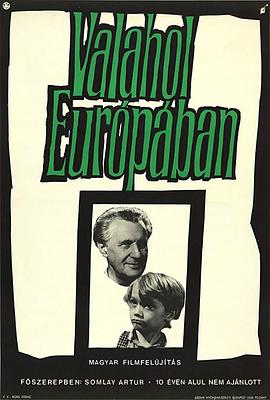
导演:
Radványi Géza
主演:
Artúr SomlayMiklós GáborZsuzsa Bánki
状态:
已完结
剧情:
Somewhere in the remote region, the war ends. In the midst of ruined cities and houses in the street...展开s, in rural hamlets, everywhere where people still live, are children who have lost their homes and parents. Abandoned, hungry, and in rags, defenseless and humiliated, they wander through the world. Hunger drives them. Little streams of orphans merge into a river which rushes forward and submerges everything in its path. The children do not know any feeling; they know only the world of their enemies. They fight, steal, struggle for a mouthful of food, and violence is merely a means to get it. A gang led by Cahoun finds a refuge in an abandoned castle and encounters an old composer who has voluntarily retired into solitude from a world of hatred, treason, and crime. How can they find a common ground, how can they become mutual friends? The castle becomes their hiding place but possibly it will also be their first home which they may organize and must defend. But even for this, the price will be very high.To this simple story, the journalist, writer, poet, scriptwriter, movie director, and film theoretician Béla Balázs applied many years of experience. He and the director Géza Radványi created a work which opened a new postwar chapter in Hungarian film. Surprisingly, this film has not lost any of its impact over the years, especially on a profound philosophical level. That is to say, it is not merely a movie about war; it is not important in what location and in what period of time it takes place. It is a story outside of time about the joyless fate of children who pay dearly for the cruel war games of adults.At the time it was premiered, the movie was enthusiastically received by the critics. The main roles were taken by streetwise boys of a children's group who created their roles improvisationally in close contact with a few professional actors, and in the children's acting their own fresh experience of war's turmoil appears to be reflected. At the same time, their performance fits admirably into the mosaic of a very complex movie language. Balázs's influence revealed itself, above all, in the introductory sequences: an air raid on an amusement park, seen in a montage of dramatic situations evoking the last spasms of war, where, undoubtedly, we discern the influence of classical Soviet cinematography. Shooting, the boy's escape, the locomotive's wheels, the shadows of soldiers with submachine guns, the sound of a whistle—the images are linked together in abrupt sequences in which varying shots and expressive sharp sounds are emphasized. A perfectly planned screenplay avoided all elements of sentimentality, time-worn stereotypes of wronged children, romanticism and cheap simplification. The authors succeeded in bridging the perilous dramatic abyss of the metamorphosis of a children's community. Their telling of the story (the scene of pillaging, the assault on the castle, etc) independently introduced some neorealist elements which, at that time, were being propagated in Italy by De Sica, Rossellini, and other film artists. The rebukes of contemporary critics, who called attention to "formalism for its own sake" have been forgotten. The masterly art of cameraman Barnabás Hegyi gives vitality to the poetic images. His angle shots of the children, his composition of scenes in the castle interior, are a living document of the times, and underline the atmosphere and the characters of the protagonists. The success of the picture was also enhanced by the musical art of composer Dénes Buday who, in tense situations, inserted the theme of the Marseilaise into the movie's structure, as a motive of community unification, as an expression of friendship and the possibility of understanding.Valahol Europaban is the first significant postwar Hungarian film. It originated in a relaxed atmosphere, replete with joy and euphoria, and it includes these elements in order to demonstrate the strength of humanism, tolerance, and friendship. It represents a general condemnation of war anywhere in the world, in any form.收起

 7.5 HD中字
The Power of Emotion explains that emotion isn't to be confused with sentimentality. Emotion is an
7.5 HD中字
The Power of Emotion explains that emotion isn't to be confused with sentimentality. Emotion is an
 6.4 已完结
During a long awaited family soiree Cedric challenges his relatives why they keep him from his jou
6.4 已完结
During a long awaited family soiree Cedric challenges his relatives why they keep him from his jou
 8.6 HD中字
一九五四年十月一日,以法属阿尔及利亚首都阿尔及尔的卡斯巴为中心,爆发了阿尔及利亚人反抗运动,这是由于阿拉伯人憎恨法国人长期统治而引起的。人们四处搞破坏,法国政府发觉事态严重,便于一九五七年十月七日
8.6 HD中字
一九五四年十月一日,以法属阿尔及利亚首都阿尔及尔的卡斯巴为中心,爆发了阿尔及利亚人反抗运动,这是由于阿拉伯人憎恨法国人长期统治而引起的。人们四处搞破坏,法国政府发觉事态严重,便于一九五七年十月七日
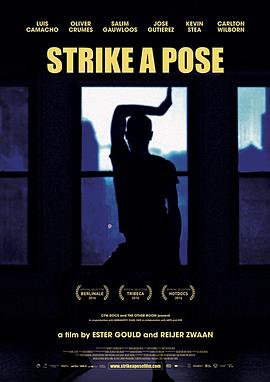 7.8 HD
For her ‘Blond Ambition’ tour in 1990, pop superstar Madonna was looking for performers who knew h
7.8 HD
For her ‘Blond Ambition’ tour in 1990, pop superstar Madonna was looking for performers who knew h
 10.0 HD中字
人到中年,纳珀拉斯(马塞洛·马斯楚安尼 Marcello Mastroianni 饰)开始体会到了人生的无奈和命运的无常。一日,在一列火车上,纳珀拉斯遇见了一个长相美艳的女子,他深深的为女子的美艳
10.0 HD中字
人到中年,纳珀拉斯(马塞洛·马斯楚安尼 Marcello Mastroianni 饰)开始体会到了人生的无奈和命运的无常。一日,在一列火车上,纳珀拉斯遇见了一个长相美艳的女子,他深深的为女子的美艳
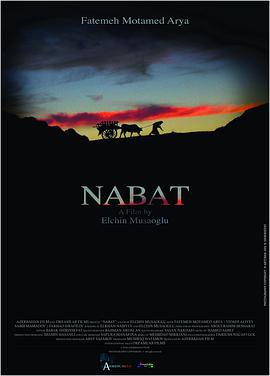 7.7 HD
老妪娜巴特和丈夫伊斯坎德尔生活在远离村庄的偏远小屋。伊斯坎德尔曾是森林巡逻队队员,现在病重在家休养。而战争肆掠此地已久,他们的儿子也在前线牺牲了。老妪家唯一的经济来源是一头奶牛,她隔些日子会去村子
7.7 HD
老妪娜巴特和丈夫伊斯坎德尔生活在远离村庄的偏远小屋。伊斯坎德尔曾是森林巡逻队队员,现在病重在家休养。而战争肆掠此地已久,他们的儿子也在前线牺牲了。老妪家唯一的经济来源是一头奶牛,她隔些日子会去村子
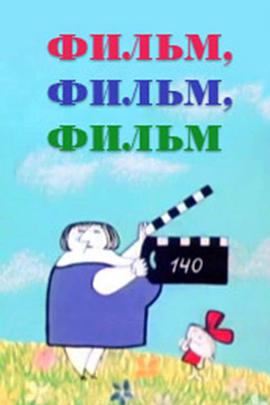 8.3 DVD
本片以电影剧照、电影宣传照、导演工作照和演员照片等引来夸张搞笑的动画,道尽一部优秀电影的出炉是何其艰难,其中的一把辛酸泪只有电影人自己才知。编剧要通过不断地与稍纵即逝的灵感做斗争,才能写出自己
8.3 DVD
本片以电影剧照、电影宣传照、导演工作照和演员照片等引来夸张搞笑的动画,道尽一部优秀电影的出炉是何其艰难,其中的一把辛酸泪只有电影人自己才知。编剧要通过不断地与稍纵即逝的灵感做斗争,才能写出自己

 9.1 HD无对白
本片是苏联纪录片导演,“电影眼”理论的创始人吉加•维尔托夫(Dziga Vertov)的代表作。电影主要拍摄于乌克兰的敖德萨市,摄像师是维尔托夫的哥哥米凯尔•卡夫曼(Mikhail Kaufman
9.1 HD无对白
本片是苏联纪录片导演,“电影眼”理论的创始人吉加•维尔托夫(Dziga Vertov)的代表作。电影主要拍摄于乌克兰的敖德萨市,摄像师是维尔托夫的哥哥米凯尔•卡夫曼(Mikhail Kaufman
 8.1 HD中字
故事讲述两个孤独的人在赫尔辛基的夜晚偶然相遇,并试图找到彼此生命中的第一个,唯一且最终的爱。他们通往这个目标的道路被男人的酗酒、丢失的电话号码、不知道彼此名字或地址,以及生活总倾向于在那些寻求幸福
8.1 HD中字
故事讲述两个孤独的人在赫尔辛基的夜晚偶然相遇,并试图找到彼此生命中的第一个,唯一且最终的爱。他们通往这个目标的道路被男人的酗酒、丢失的电话号码、不知道彼此名字或地址,以及生活总倾向于在那些寻求幸福
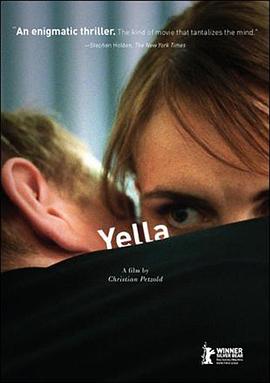 7.5 已完结
女会计师耶拉(Nina Hoss 尼娜·霍斯 饰)遭遇生活危机,与具有暴力倾向的丈夫本(Hinnerk Schönemann 饰)离婚后,她在汉诺威阿尔法飞机厂找到一份新工作。在启程的当天,渴望赢
7.5 已完结
女会计师耶拉(Nina Hoss 尼娜·霍斯 饰)遭遇生活危机,与具有暴力倾向的丈夫本(Hinnerk Schönemann 饰)离婚后,她在汉诺威阿尔法飞机厂找到一份新工作。在启程的当天,渴望赢